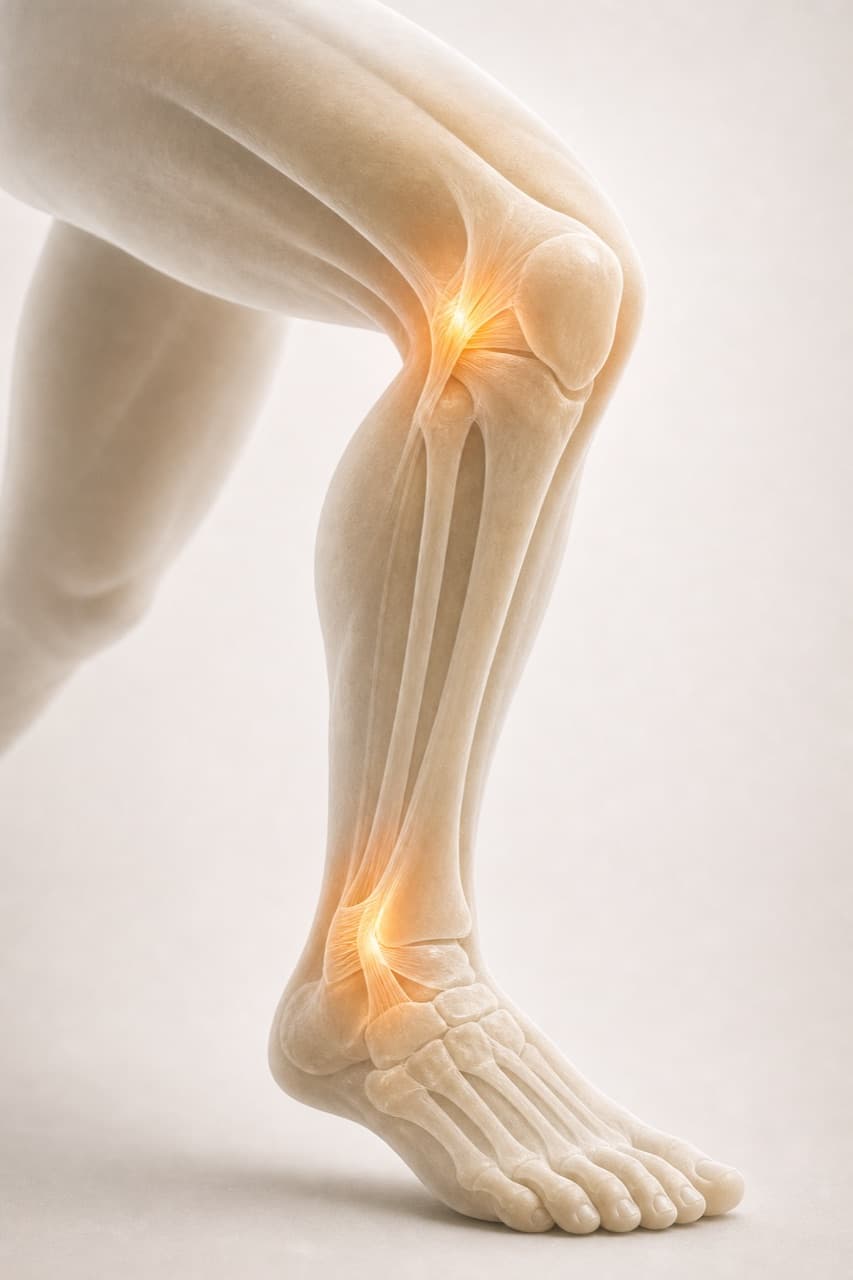
Foot & Ankle Pain (Hallux Valgus, Flat Feet)
Foot and ankle pain, including bunions (hallux valgus) and flat feet, can affect walking and balance. Physiotherapy, exercise and supportive warm-water mobilisation can reduce pain and improve function.
What are hallux valgus and flat feet?
The foot and ankle absorb load and propel us with every step, so pain here quickly affects daily life. Hallux valgus, commonly known as a bunion, is a progressive deformity in which the big toe drifts toward the smaller toes and a bony bump forms at the joint, often causing pain and difficulty with footwear.
Flat feet (pes planus) describe a lowered or collapsed arch, which can be flexible or rigid. Many people with flat feet have no symptoms, but some develop arch, heel or ankle pain, fatigue and altered walking patterns. Both conditions can be influenced by footwear, activity, body weight and the strength of the supporting muscles.
Strengthening the foot and ankle and improving how you move are central to managing most foot pain.
Signs and symptoms
Foot and ankle problems present in different ways depending on the structures involved.
- A visible bump or sideways drift of the big toe (bunion)
- Pain or tenderness at the big-toe joint, arch or heel
- Aching, tired feet after standing or walking
- Swelling, redness or hardened skin over pressure points
- Difficulty finding comfortable footwear
- Reduced balance or an altered, rolling-in walking pattern
How physiotherapy helps
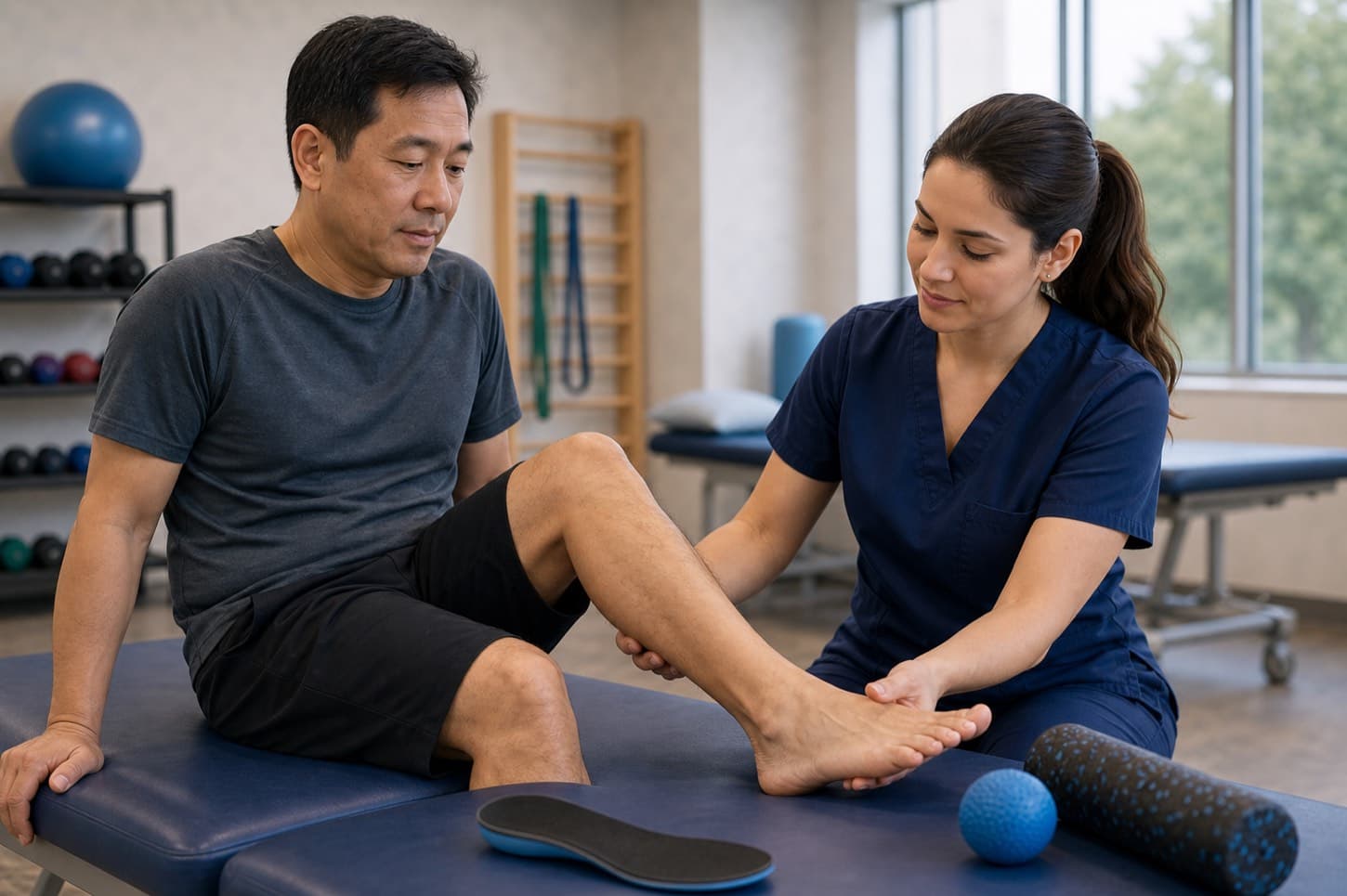
Physiotherapy plays a central role in managing foot and ankle pain. Guidance from bodies such as NICE and clinical consensus supports conservative care first, including exercise, footwear modification and orthoses, before surgery is considered for conditions like hallux valgus and symptomatic flat feet. A physiotherapist assesses your gait, arch and ankle mechanics and tailors a plan accordingly.
Treatment commonly includes strengthening of the foot's intrinsic muscles, calf and ankle, balance and gait retraining, stretching, and advice on supportive footwear or orthotic devices. The goal is to reduce pain, improve foot function and keep you walking comfortably.
The IMT thermal approach
At Istanbul Medical Thermal, the buoyancy of our warm thermal pools reduces the load passing through painful feet and ankles, allowing gentle mobilisation and gait practice that may be uncomfortable on hard ground. The warmth helps relax the calf and foot muscles and can ease stiffness around the affected joints.
Working with our multidisciplinary team, hydrotherapy is combined with land-based strengthening, balance training and practical footwear guidance. On-site accommodation lets international guests build foot and ankle resilience over a focused, supervised stay.
REDUCED-LOAD MOBILISATION
In warm water, painful feet bear less weight, so balance and walking practice can begin comfortably before progressing onto land.
What to expect
Care begins with an assessment of your feet, ankles, arch and walking pattern, leading to an individualized programme. Treatment blends warm-water and land-based work, with on-site thermal accommodation supporting a steady, uninterrupted course of rehabilitation.
- Gait, arch and ankle assessment
- Intrinsic foot, calf and ankle strengthening
- Balance and walking retraining, including in warm water
- Footwear and orthotic guidance
- Review and progression with the multidisciplinary team
When to seek care
Consult a qualified health professional if foot or ankle pain is severe or persistent, if a deformity is worsening, or if you notice significant swelling, redness, numbness, or an inability to bear weight. Early assessment helps confirm the cause and ensures any rehabilitation or footwear advice suits your needs.
Sources
- NICE — Guidance on foot and ankle disorders
- Mayo Clinic — Bunions (hallux valgus)
- Mayo Clinic — Flatfeet
- World Physiotherapy — Musculoskeletal rehabilitation
This information is educational and is not a substitute for professional medical advice, diagnosis, or treatment. Always consult a qualified healthcare provider about your individual condition.