Spinal Cord Injury & Partial Paralysis
Spinal cord injury can cause partial or complete loss of movement and sensation below the level of damage. Structured rehabilitation helps maximise function, independence and quality of life.
Understanding spinal cord injury
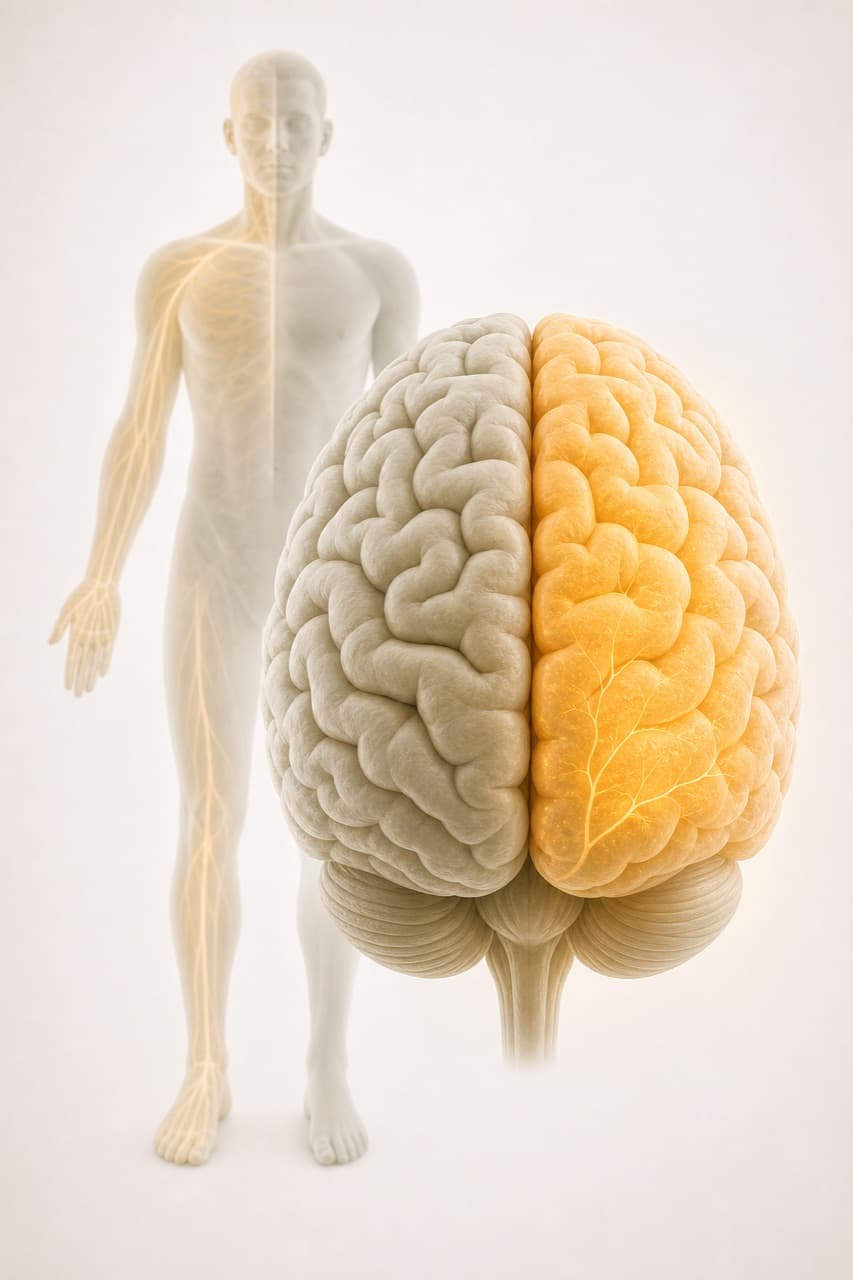
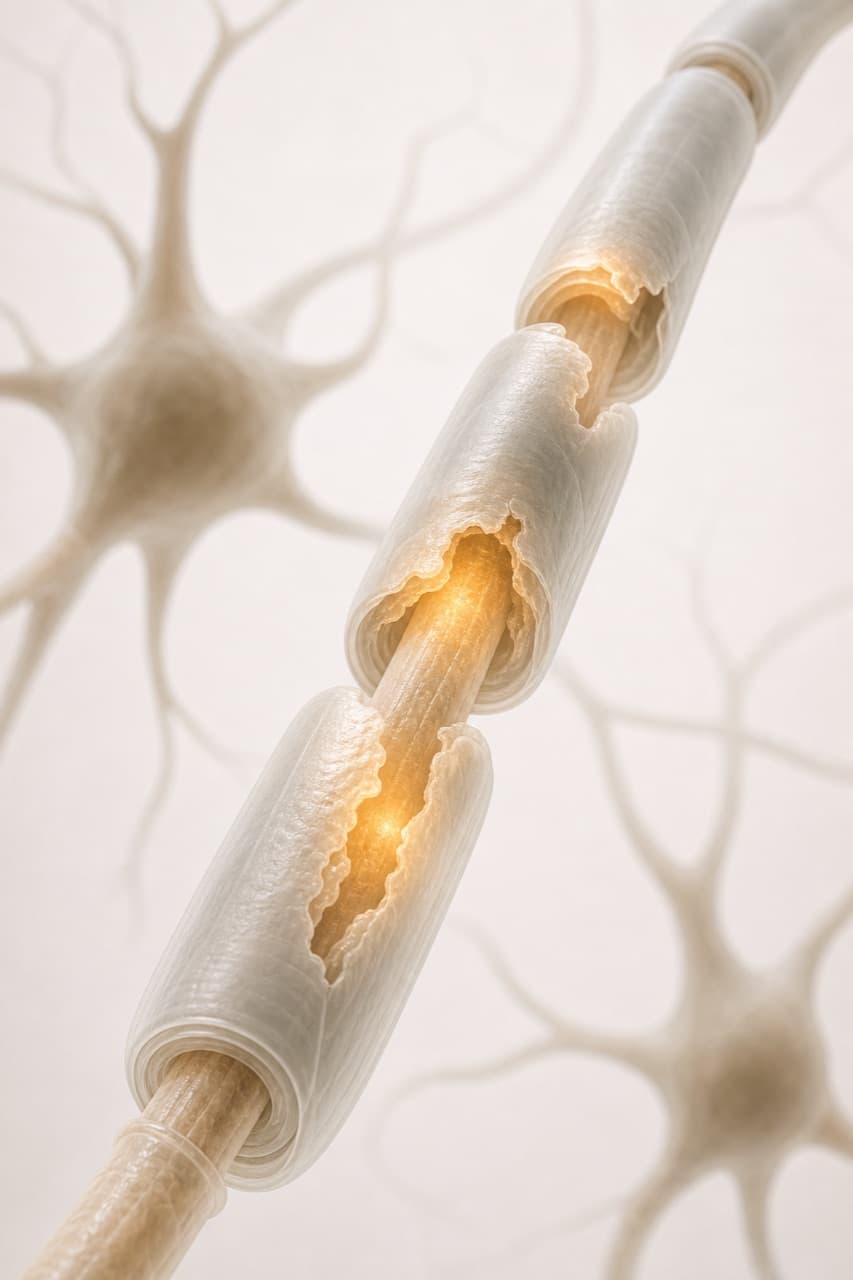
The spinal cord carries signals between the brain and the rest of the body. When it is damaged by trauma or disease, those signals are disrupted, which can cause weakness, partial paralysis (paresis) or complete paralysis, along with changes in sensation, below the level of injury. The higher the injury on the cord, the more of the body may be affected.
Injuries are described as complete, with no movement or sensation below the injury, or incomplete, where some function remains. Many people retain some ability that targeted rehabilitation can strengthen, and the goal of care is to optimise independence, comfort and participation in everyday life.
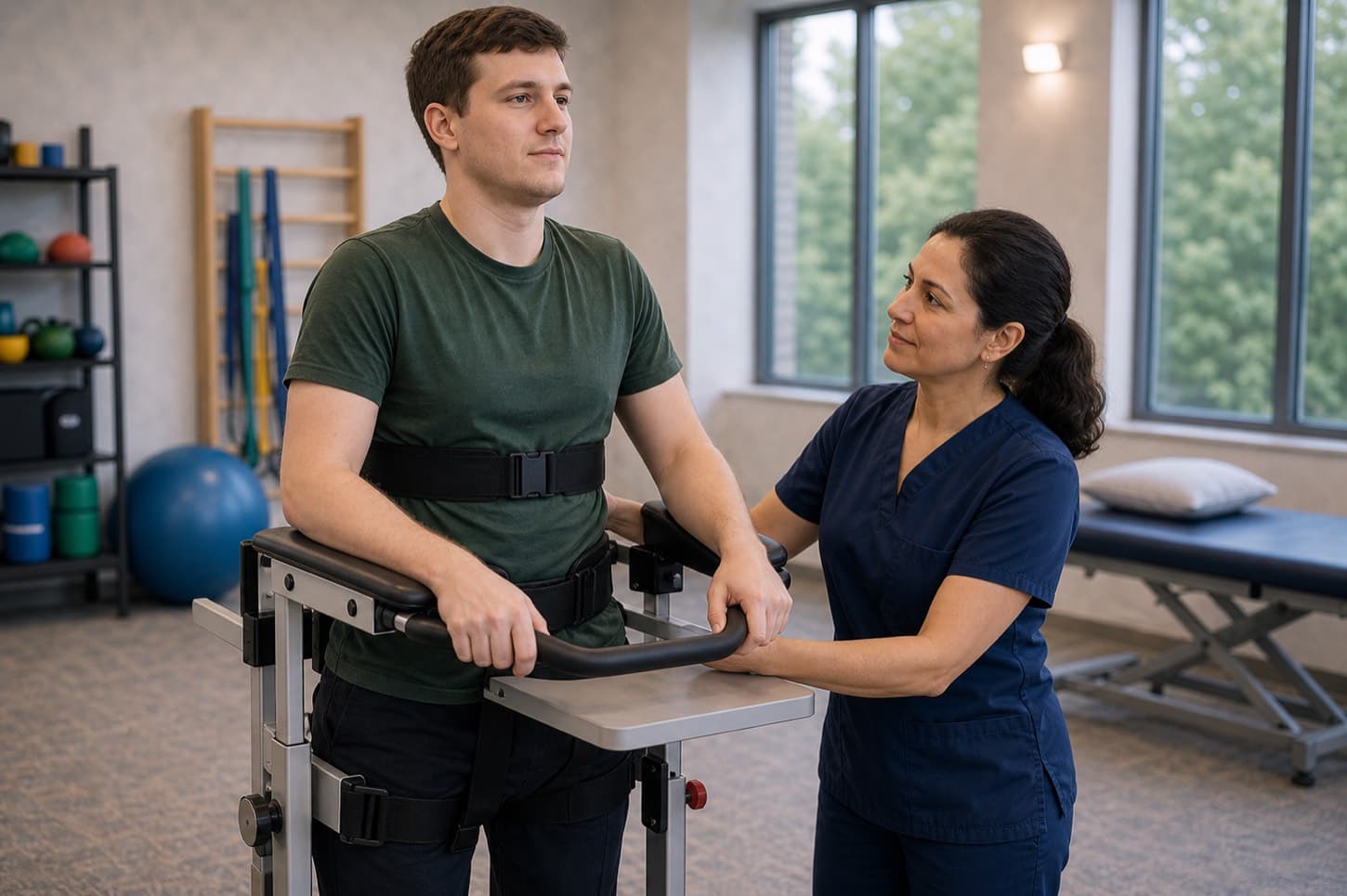
Task-specific training and strengthening can help people with spinal cord injury maximise remaining function and independence.
Signs and symptoms
The effects of a spinal cord injury vary with its level and completeness, and may include:
- Partial or complete loss of movement in the limbs or trunk
- Altered or lost sensation, including touch, temperature and pain
- Muscle spasticity, weakness or loss of muscle bulk
- Difficulty with balance, posture and transfers
- Changes in bladder, bowel or sexual function
- Increased risk of pressure sores, pain and reduced fitness
How rehabilitation helps
Rehabilitation after spinal cord injury, as supported by the World Health Organization and World Physiotherapy, aims to maximise remaining function and prevent secondary complications. Physiotherapists use strengthening, range-of-motion work, balance and task-specific training, along with mobility and transfer skills, to help people do as much as possible for themselves.
Care is delivered by a multidisciplinary team that may include physiotherapists, occupational therapists, rehabilitation physicians and nurses. The programme is tailored to the individual's injury level and goals, and includes education on posture, skin care and staying active to protect long-term health.
The IMT thermal approach
Exercise in our natural warm thermal water can be a valuable part of rehabilitation. Buoyancy unloads the body and joints, so people with partial paralysis can practise movements, standing and supported stepping that would be harder or riskier on land, with a reduced chance of falling. Warm water can also help ease muscle spasticity and improve comfort during exercise.
Aquatic therapy never replaces conventional neurorehabilitation; it complements the work of our multidisciplinary team toward shared functional goals. With on-site accommodation beside the thermal baths, patients can take part in sustained, intensive programmes and rest comfortably between sessions.
Movement with less load
Water's buoyancy lets patients rehearse strength, balance and supported stepping safely, while warmth helps relax tight, spastic muscles.
What to expect
We start with a detailed assessment of your injury level, remaining function and personal goals, then design an individualised plan combining gym-based and warm-water therapy. Progress is reviewed regularly, and staying on site within the thermal facility supports an intensive, focused rehabilitation journey.
- Assessment of injury level, strength and remaining function
- Strengthening, mobility and transfer training
- Warm-water exercise to practise movement with reduced load
- Education on posture, skin care and complication prevention
- Ongoing reviews to advance goals safely
When to seek care
Any suspected spinal injury after trauma is a medical emergency, do not move the person and call emergency services immediately. For ongoing care, work with qualified healthcare professionals to plan rehabilitation, and seek prompt medical attention for new weakness, worsening sensation, signs of infection, skin breakdown or changes in bladder or bowel control.
Sources
- World Health Organization (WHO)
- World Physiotherapy
- Mayo Clinic
- Christopher & Dana Reeve Foundation
This information is educational and is not a substitute for professional medical advice, diagnosis, or treatment. Always consult a qualified healthcare provider about your individual condition.